It’s a painting that has been around for decades, even centuries.
Yet somehow it has managed to stand the test of time.
Most of us grew up at least seeing The Last Supper painting, and many of us had it hanging in our homes.
It is said to depict the Biblical event where Jesus had his last meal with his disciples before he was crucified.
It is believed to have been the Passover meal that celebrates the Jews’ escape from Egyptian slavery.
Jesus also announced that he had been betrayed by one of the disciples at this meal.
The painting was created by Leonardo da Vinci in 1495. He was 43-years-old at the time and had suffered from several failed projects.
It is believed he took this work to help make his mark on the art world and turn his life around.
Even though it is a piece of art that most of us are familiar with, there are likely several things that you don’t know about it.
Check out this list below and see how many surprises you find out.
1. Leonardo da Vinci was new to painting murals and this was the largest piece he had ever done. Because of his inexperience, and because he needed ample time to work on the project, he decided not to mix the colors with the wet wall plaster directly which is the traditional practice.
Instead, he applied them directly to the plaster. Consequently, the painting began flaking just 20 years after it was completed.
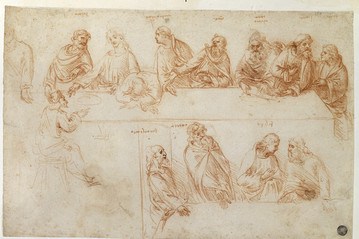
2. da Vinci had a reputation of failing to complete his work, so with this piece of art he hoped to make a name for himself. Unlike many artists who never see their work become famous, this one was instantly popular as soon as it was completed. For the next century it became the most copied painting ever.
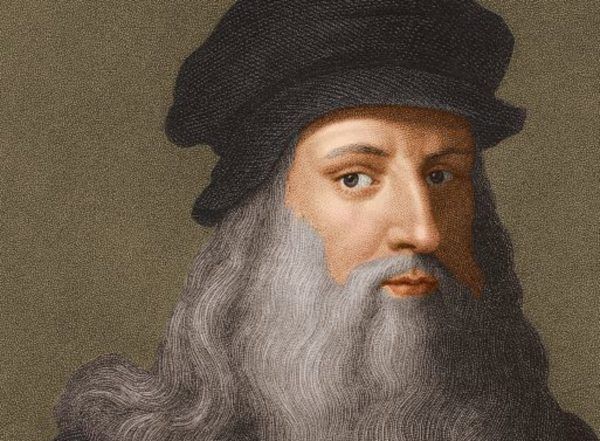
3. The painting has also been through some trauma. Although the painting was chipping, the church did very little to preserve it. In fact, they even cut a door into the painting because it was no longer seen as an important part of history.
During the Napoleonic Wars, troops were housed in the church and used the art work as target practice with much damage being done to Jesus’ face.
When World War II rolled around, patrons of religious art made preparations to protect the painting and placed scaffolding and sand bags in front of it.
When a bomb landed close to the church, the roof and some walls were destroyed, but their work paid off. The painting was still there.
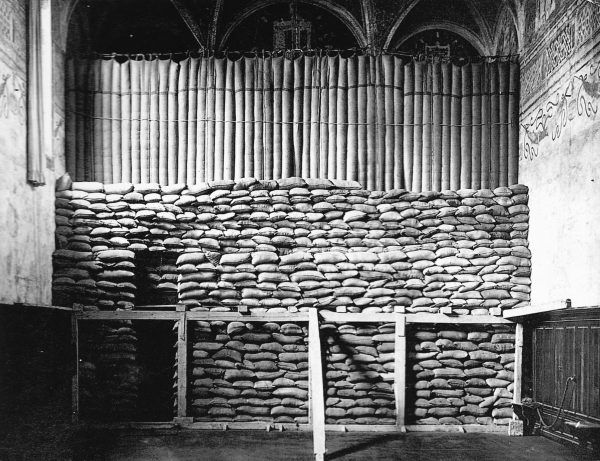
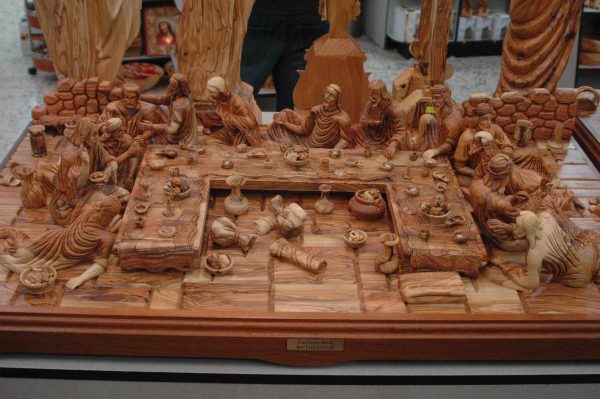
4. Two almost identical replicas of the painting exist and are believed to have been painted by da Vinci’s assistants. Both are in preserved states with one being held at the Royal Academy of Arts in London and the other at the Church of St. Ambrogio in Ponte Capriasca, Switzerland.
These give us an idea of what The Last Supper might have looked like today if it had been in better conditions.
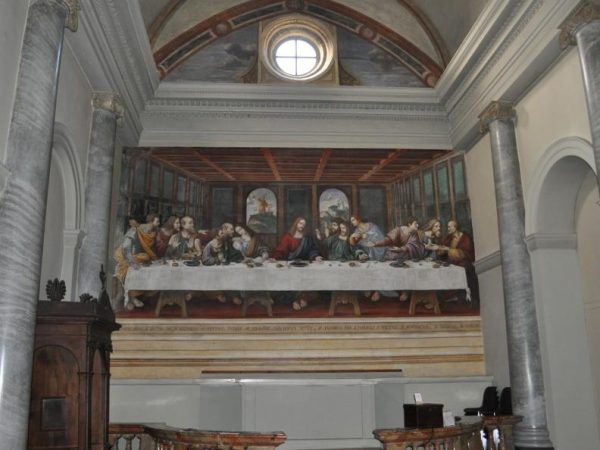
5. In the era of the Italian Renaissance, art was designed to educate those viewing the work and not just be beautiful. The Last Supper was no exception. Each disciple in the piece of artwork was carefully placed, and all details were created intentionally, including Jesus’ feet.
They were placed in crucifix style position to foreshadow what was to come. Unfortunately, the doorway that was cut through the painting in 1652 eliminated this element of the work.
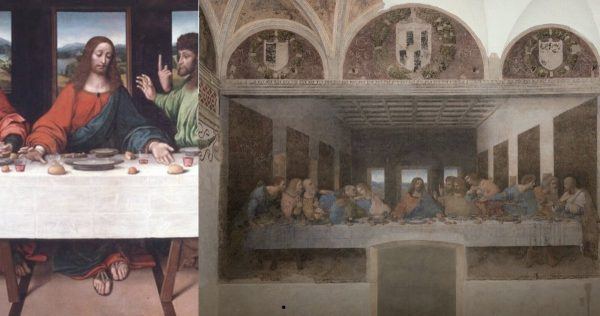
6. Because da Vinci likely wanted to influence the viewers of his work, The Last Supper shows more Italian influences than Jewish. Believing that the meal was a Passover meal, round Italian loaves of bread like in the artwork wouldn’t have been served and it would have happened as sunset, not with the sunlight pouring through the window.
The landscape outside is obviously Italian as well. At a Jewish meal, the disciples would likely have been lounging around a low U-shaped table rather than sitting around a table like in da Vinci’s scene.
The colors of the robes and the faces of the disciples were also Italian in nature.
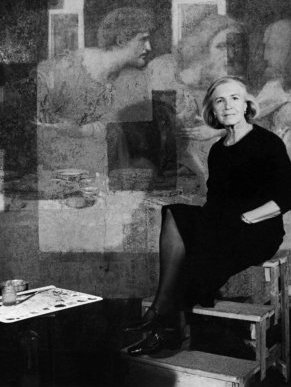
7. The painting that we see today is not actually da Vinci’s work and is actually a restoration work of Dr. Panin Brambilla Barcilon that was started in 1978. An estimated 20 percent of the original painting is all that is left.
All but three of the faces were repainted in 1770 by Giuseppe Mazza, and in 1821 Stefano Barezzi attempted to put the entire painting onto canvas.
These two attempts did more harm than good to the painting. Mauro Pellicioli tried to reseal the painting with shellac in 1949, and then Dr. Barcilon began her work in the 1970’s and worked on the restoration for 20 years using x-ray technology.
Although the painting we see today may not be an exact replica of da Vinci’s work, it is still a remarkable piece of history that has withstood the test of time.
Be sure to share these interesting secrets of The Last Supper with your family and friends.
COMMENTS POLICY: We have no tolerance for messages of violence, racism, vulgarity, obscenity or other such discourteous behavior. Thank you for contributing to a respectful and useful online dialogue.