Squirrel expert John Koprowski was visiting India in 2006 when he first laid eyes on the Malabar giant squirrel, also known as the Indian giant squirrel. Koprowski could not believe his eyes when he first saw the animal as it’s massive size made it look more like a primate than a squirrel!
Believe it or not, this creature really is an enormous squirrel that can be as much as 36 inches long!
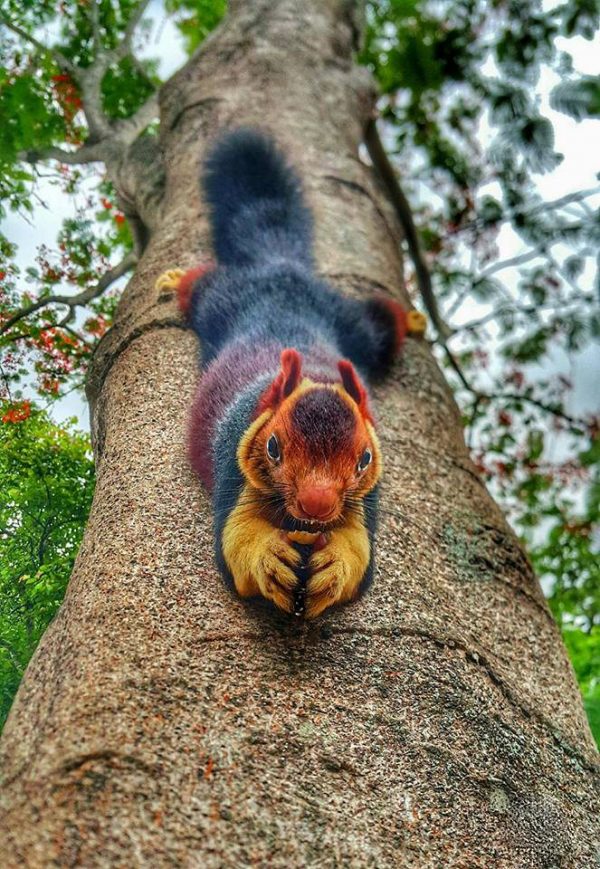
“These are giants!” said Koprowski, a professor and associate director at the School of Natural Resources and Environment at the University of Arizona.
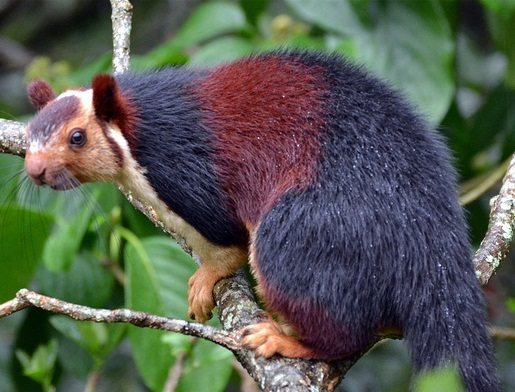
Not only are Malabar squirrels huge, they also have colorful fur! The colors of this squirrel range from black, orange, and brown to purple and maroon which is rare for a mammal.
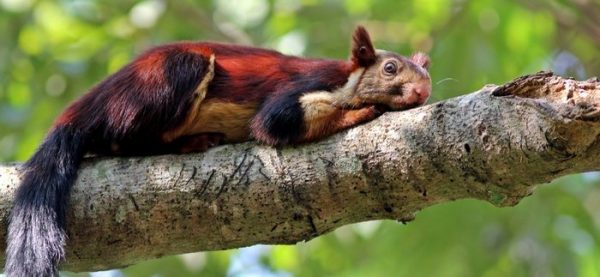
It is their bright colors and gorgeous patterns that help the squirrels survive in the wild.
“In the shaded understory of a dense forest, the patchy colors and dark hues are a great adaptation to avoiding detection,” Koprowski said. “But when you see these in the sunlight, they show their ‘true colors’ and beautiful pelage [fur].”
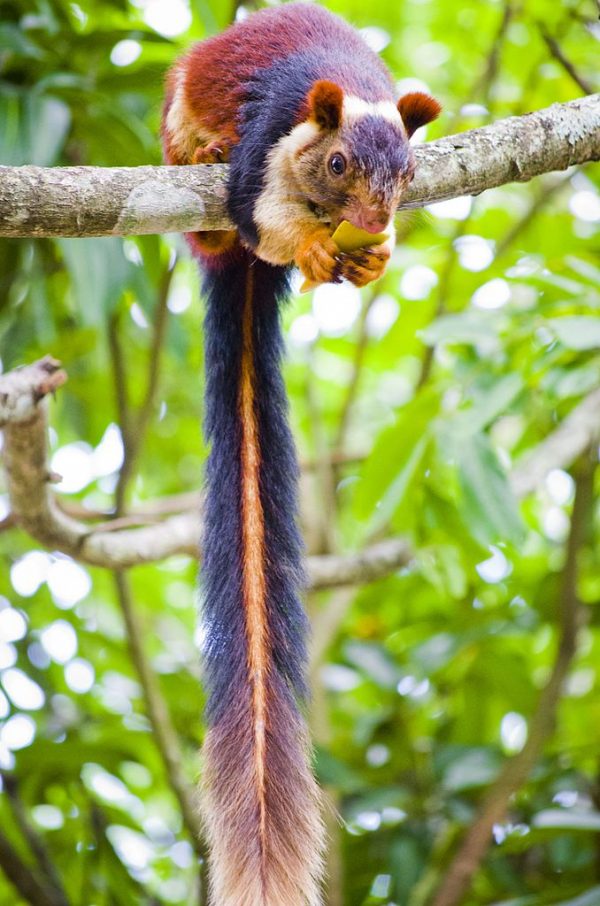
These squirrels love to feast on fruit, flowers, nuts and tree bark. You have likely never seen these squirrels, however, because they typically live high up in the forest canopy, where they jump from tree to tree.
“They are pretty shy,” Pizza Ka Yee Chow, squirrel expert and research fellow at Hokkaido University. “One of my friends who lives in India shared with me that the best way to see these giant squirrels is to climb up on a tree, stay very quiet and wait for them to emerge from their [nest].”
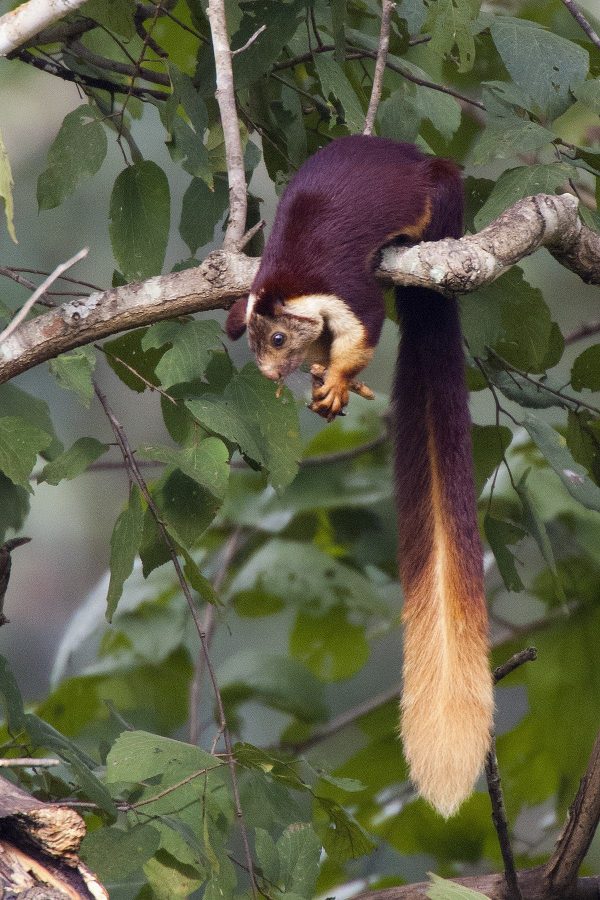
While these squirrels are not in danger currently, they will need protection in the future.
“The real threat is the slow loss and degradation of forested habitats as humans move in and as climate change impacts higher elevation areas,” Koprowski said. “The good news is that they have a wide distribution and seem to tolerate human presence and even some modest level of low-density housing.”
However, experts believe that these squirrels will be able to thrive in the future if they are given the protection they need.
“They’re part of a group of squirrels that is pretty ancient,” Koprowski said. “They’re a unique evolutionary group that’s been here a long time, which is a good thing.”
SHARE this story so your friends and family can meet these amazing squirrels as well!
COMMENTS POLICY: We have no tolerance for messages of violence, racism, vulgarity, obscenity or other such discourteous behavior. Thank you for contributing to a respectful and useful online dialogue.