It’s been over four years since comedic actor Robin Williams committed suicide, but he is still dearly missed by millions of fans all over the world. Now, heartbreaking new details about his final days have been revealed.
Susan Schneider, the actor’s wife, has revealed that Williams was suffering from bipolar and manic depression at the time of his death. In addition, the star was battling Lewy body dementia (LBD), a form of difficult-to-diagnose dementia with symptoms such as slowed motor function, depression and hallucinations. Schneider described the disease as “chemical warfare in the brain” and added that “no one could have done anything more for Williams.” She said that it was heartbreaking to watch him “disintegrate” before her eyes.
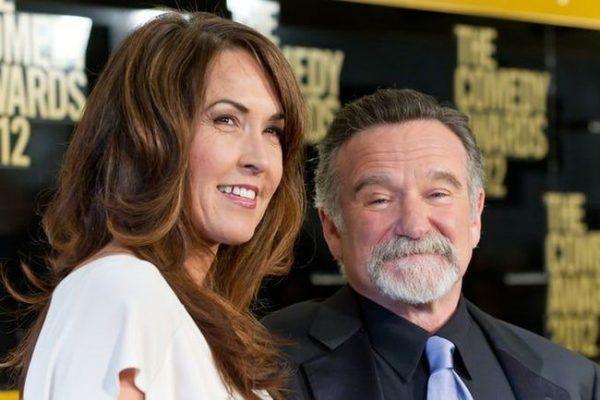
“My best friend was sinking,” Schneider said.
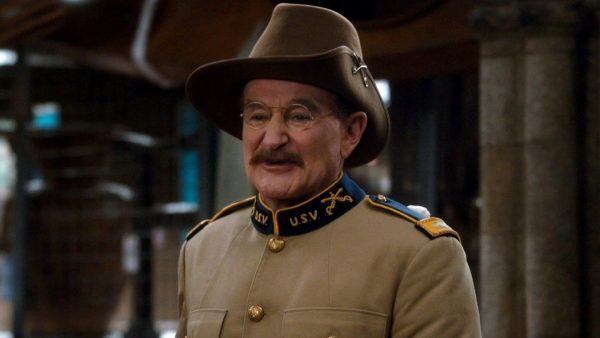
In his new biography “Robin,” writer Dave Itzkoff details what Williams went through in the final months of his life. In the book, Itzkoff wrote about an incident that occurred on the set of Night At The Museum: Secret Of The Tomb, which was his final movie.
“He was sobbing in my arms at the end of every day. It was horrible. Horrible,” makeup artist Cheri Minns recalled. “I said to his people, ‘I’m a makeup artist. I don’t have the capacity to deal with what’s happening to him.'”
Minns suggested that Williams start doing standup comedy again, hoping that this would help him, but he said he could not do it.
“He just cried and said, ‘I can’t, Cheri. I don’t know how anymore. I don’t know how to be funny,'” Minns said.
Williams did not know that he had LBD because he had been misdiagnosed with Parkinson’s disease, which is also a progressive disorder that affects the nervous system.
“I put myself in his place. Think of it this way: The speed at which the comedy came is the speed at which the terrors came,” Minns said. “And all that they described that can happen with this psychosis, if that’s the right word — the hallucinations, the images, the terror — coming at the speed his comedy came at, maybe even faster, I can’t imagine living like that.”
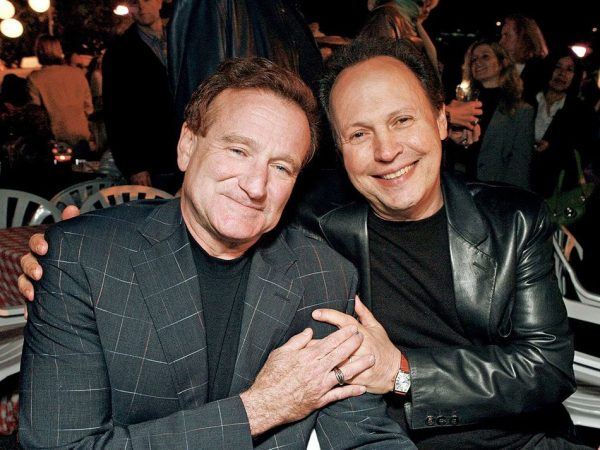
Billy Crystal, a longtime friend of Williams, knew something was wrong when he saw him months before his death.
“I hadn’t seen him in about four or five months at the time, and when he got out of the car I was a little taken aback by how he looked. He was thinner and he seemed a little frail,” said Crystal. “He seemed quiet. On occasion, he’d just reach out and hold my shoulder and look at me like he wanted to say something. He hugged me goodbye, and Janice, and he started crying. I said, ‘What’s the matter?’ He said, ‘Oh, I’m just so happy to see you. It’s been too long. You know I love you.’”
“His number comes up on my phone and he says, ‘Hey, Bill.’ His voice was high-pitched. ‘I’ve just been diagnosed with Parkinson’s,’ ” Crystal recalled. “I didn’t miss a beat. Because of my relationship with Muhammad Ali, I knew a lot of really good Parkinson’s research doctors. I said, ‘In Phoenix, the research center is great. If you want, we can get you in there. It would be totally anonymous. Do you want me to pursue that?’ Would you?’” I never heard him afraid like that before. This was the boldest comedian I ever met — the boldest artist I ever met. But this was just a scared man.”
“I know now the doctors, the whole team was doing exactly the right things,” Schneider said. “It’s just that this disease was faster than us and bigger than us. We would have gotten there eventually.”
Schneider is now using what happened to her husband to raise awareness of rare brain disorders. What happened to Williams is incredibly sad, but at least he is at peace now.
COMMENTS POLICY: We have no tolerance for messages of violence, racism, vulgarity, obscenity or other such discourteous behavior. Thank you for contributing to a respectful and useful online dialogue.